
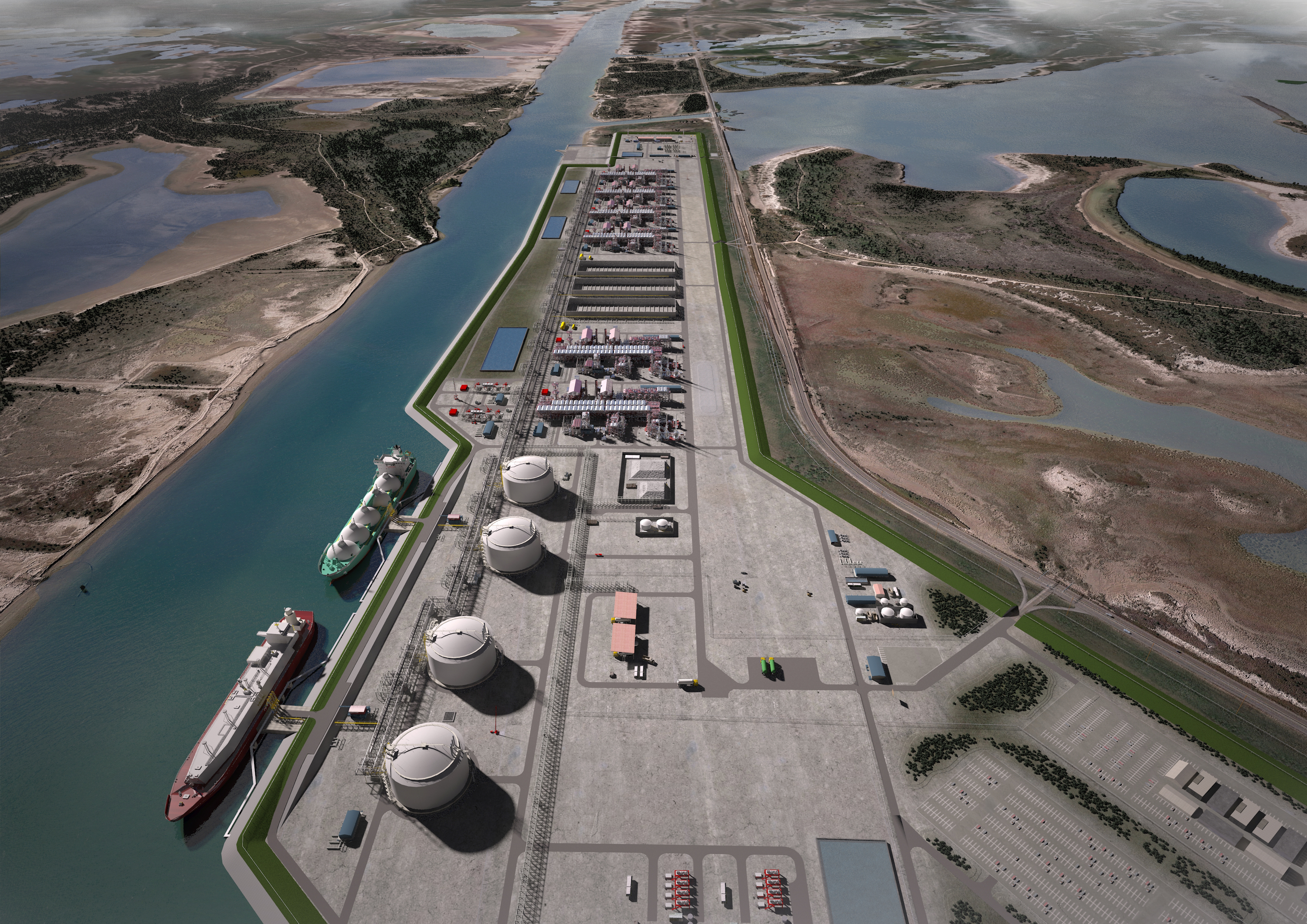
The three liquefied natural gas facilities scheduled to begin construction along the Brownsville Ship Channel in 2017 and 2018 will have an enormous effect on the economy of the Valley and the nation. Given the initial capital investments of $10 billion in the three plants, South Texas is poised to become an epicenter of the LNG trade and clean energy (including wind and solar). Within five years, the United States is projected to be the world’s third largest liquefied natural gas supplier, thanks to five new LNG terminals in Louisiana, Texas and Maryland. Beyond the capital investments, the region can expect thousands of high-paying construction jobs and new revenue streams for local suppliers of myriad goods and services. Additional benefits include an expanded tax base and hundreds of permanent, well-paid jobs operating the LNG plants and supplying them.
The three plants are well along in the complex application process with the Federal Energy Regulatory Commission and anticipate approvals in the next four to 15 months. Yet, despite over 50 years of LNG plant operations without any incident that impacted public safety, public misconceptions about LNG have been a hindrance.
Liquefied Natural Gas is not flammable and does not explode. If it is spilled, it evaporates quickly leaving no residue in soil or water. The LNG facilities are not refineries. Instead each is a liquefaction plant: when natural gas is chilled to minus 260 degrees in long chambers called trains, it becomes a liquid which is stored at low pressure at the export terminal.

Next Decade LLC’s Rio Grande LNG is the largest proposed private investment in all of Texas and among the largest nationally with an initial $6 billion slated for the Brownsville Shipping Channel site. Proposed expansions would boost the total investment to $20 billion. Team members have developed 10 liquefaction terminals, more than 10 pipelines and multiple related facilities, including one in Boston harbor.
“This project supports global environmental goals. The reality is this gas is going to replace coal-fired plants. In Europe, customers are seeking independence from Russia, so this furthers U.S. geopolitical goals,” said Next Decade CFO Ben Atkins. “The beauty of this project is that it is founded on long term (LNG) sales contract, and Texas has huge reserves.” The Rio Bravo pipeline will supply Permian Basin and Eagle Ford natural gas to the facility. Giant tankers, fueled by LNG, will carry LNG to foreign ports.
The facility will have a vegetated, 16-foot-high perimeter berm that protects the 750-acre production field and its six super-cooling trains from storm surge and from sight of passersby. Atkins said RG LNG will use construction contractor CB&I to build the Valley facility. When awarding contracts, CB&I gives preference to local companies. When that’s not possible, outside bidders must show their plan to use local subcontractors.
Next Decade CEO Kathleen Eisbrenner signed a MOU with UTRGV President Guy Bailey in September. They established a strategic partnership between academia and industry that fosters STEM education and promotes collaboration.
Atkins expects the FERC decision in the first quarter of 2017. RG LNG expects to have 270 permanent employees, with a $50,000 minimum salary, once the facility begins operating.

Texas LNG is the smallest of the projects, with a $1 billion investment in Phase 1 on 625 acres, according to project director Dave Glessner, but the company was the first to file its application in March 2016, after two years of preparation. “It’s a long process and right now we are in the middle of it.”
Texas LNG’s strategy is to avoid, minimize and mitigate the impact on native species, cultural resources, traffic, tourism, and recreation. He said the project will be almost undetectable visually from South Padre and Port Isabel with its low physical profile and no flaring.
Glessner said employment during the three-year construction phase will peak at 600. He estimated the company would pay $191 million per year in state and local taxes during construction. During operation, the LNG plant will have 80 full time employees averaging $80,000 annually.
ANNOVA has proposed a $3 billion, midscale LNG liquification plant on 650 acres, according to William P. Harris, senior communications manager. FERC approval is anticipated in early 2018 with commercial operations due to start in 2021.
The facility on the south side of the ship channel will include a LNG carrier dock and two storage tanks. During the 48-month construction period, Annova would employ about 700 in jobs averaging $50,000 annually. When operating, Harris projected the average compensation would be about $70,000 for about 165 employees.
Harris listed reasons why Annova chose Brownsville for its facility: land availability, location (near natural gas reserves), infrastructure and the shipping channel access to global markets. “Plus the Rio Grande Valley has a pool of skilled worker to hire and help run the plant. All this makes Brownsville the right choice.” The company is committed to STEM education.

The impact
Thousands of jobs will be up for grabs during construction of the LNG plants, but so will hundreds of millions of dollars in contracts for a huge range of goods and services. Trucking, food service, medical services, communications, IT, security and engineering services are needed.
“We’re going to need lot of people,” predicted James Markham-Hill of Rio Grande LNG, which expects to begin construction by late 2017. The CB&I workforce would average 2,700 with a peak of 5,000. “Our company’s priority is to maximize the local workforce. CB&I, interestingly, is already the employer of many RGV citizens in Corpus Christi and Louisiana.”
The company hopes those individuals will bring their higher skill levels (and commensurate pay levels) back home. Additionally, many oil field skills are transferable to LNG facility construction. Markham-Hill said the company is working with high schools, technical schools and colleges, as well as UTRGV, to open pathways to employment at RG LNG.
The challenge for Valley businesses, Markham-Hill said, is that many haven’t worked with large industry. To bridge that gap, Rio Grande LNG held five workshops for potential suppliers earlier this year that more than 250 attended. During the events, reps went over the types of goods and services needed and how a business could be pre-qualified. “Our goal with local companies is to get them registered and pre-qualified with CB&I so they’ll be ready for contracts, likely in mid-2017. It’s important that businesses don’t self-eliminate. They need to at least get on our radar.”
As the plants receive their permits, export licenses, commercial contracts and financing, the Valley dynamic and economy are going to change dramatically.
For more information, see riograndelng.com, annovalung.com and txlng.com.
December 2016 cover story by Eileen Mattei